Caring for a baby's delicate skin: a simple daily routine
By Team Cosmevo · 9 October 2026 · 6 min read
A simple baby skin routine has three steps: a short bath in lukewarm water, a little mild soap, and a soft pat dry. Do the same thing every day, keep products few, and test anything new on a small patch first. If your baby has a rash, very dry patches or anything that worries you, ask your paediatrician before you try a new product.
Why a baby's skin needs a gentler routine
A baby's skin is thinner and more delicate than yours. It dries out faster, and it reacts quickly to heat, sweat, rough towels and strong products. In Lahore and across the plains, summer sweat and dust settle in the folds of the neck and thighs. In winter, dry air and gas heaters take moisture out of the room, and out of your baby's skin too.
The good news is that you do not need a long routine. Most babies do well with a calm, repeated habit. Fewer products also means fewer things that could upset the skin, and it is easier to see what caused a problem if one appears.
A simple daily routine
1. Keep bath time short
Five to ten minutes is enough. Use lukewarm water, not hot. Test it on the inside of your wrist first. Hot water feels nice to a tired parent, but it can leave a baby's skin tight and dry.
In hot weather, one bath a day is usual. In cold weather, many families bathe their babies less often, with a gentle wipe of the face, hands and nappy area in between. Do what suits your home and your baby.
2. Use a little soap
A baby does not need a thick lather. A small amount is enough for the neck, underarms, nappy area and skin folds, where sweat and milk collect.
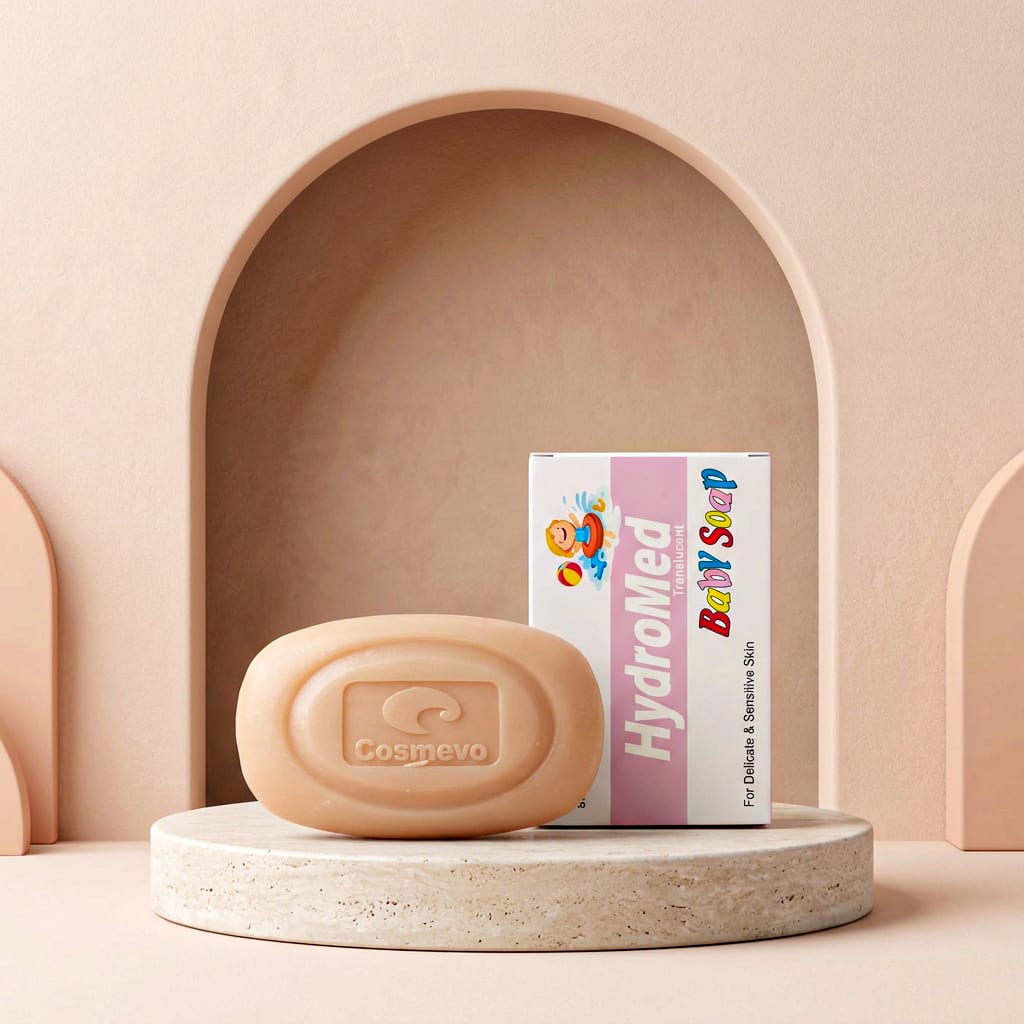
Hydro Med Baby Soap is made for baby bath time. The box says it has a tear-free formula. It also says to massage it gently on the body, let the lather stay on the skin for 1 to 2 minutes, rinse thoroughly with lukewarm water and pat dry. The box says you can use it twice a day.
The ingredient list on the box includes shea butter, glycerin, hyaluronic acid and vitamin E acetate. Shea butter is a soft plant fat that helps skin feel soft. Glycerin helps skin hold on to water. You can read more about glycerin on its own page.
The box also warns that soap can still hurt the eyes. If it gets into your baby's eyes, rinse well with plenty of water. Tear-free does not mean you can stop being careful around the face.
3. Rinse well
Soap left on the skin can make it feel dry. Rinse the neck, behind the ears, under the arms and between the legs with clean water. Then rinse once more. This step matters more than which soap you pick.
4. Pat dry, do not rub
Use a soft, clean towel. Press it gently on the skin. Rubbing can make delicate skin red. Dry the folds with extra care, because damp skin folds stay warm and sticky, especially in humid months.
5. Dress your baby in soft cotton
Cotton lets the skin breathe. Wash baby clothes with a mild detergent and rinse them well. In winter, layers work better than one heavy, scratchy sweater. Take a layer off if your baby feels sweaty at the back of the neck.
Patch test before you start
Every baby is different. Before you use any new soap or product, do a small patch test.
- Wash a small area, such as the inside of the forearm or the back of the thigh, with the product and rinse well.
- Pat the area dry.
- Wait 24 hours and look at the spot. Check for redness, bumps or signs that your baby is bothered by it.
- If the skin looks calm, you can go ahead and use the product on the whole body.
- If you see redness or irritation, stop using it and speak to your paediatrician.
Introduce only one new product at a time. If you change the soap, the detergent and the cream in the same week, you will not know which one caused a reaction.
What to do about dry patches and rashes
Many babies get a little dry skin on the cheeks, elbows or shins, especially in winter. Some simple habits help. Keep baths short, use lukewarm water, pat dry and keep the room from getting too hot and dry.
But a rash is a different matter. If your baby has a rash, very dry or cracked patches, skin that looks red and angry, or skin that seems to bother your baby, please ask your paediatrician. Do not guess, and do not try several products one after another. A doctor can look at the skin and tell you what it needs.
Also call your paediatrician if a skin problem is painful, spreads, keeps coming back, or does not settle in a few days.
Other products in the family
Not every product in the range is meant for a baby. If you want to use a product on your baby that is not the baby soap, ask your paediatrician first. You can browse the body and baby care range for the whole family.
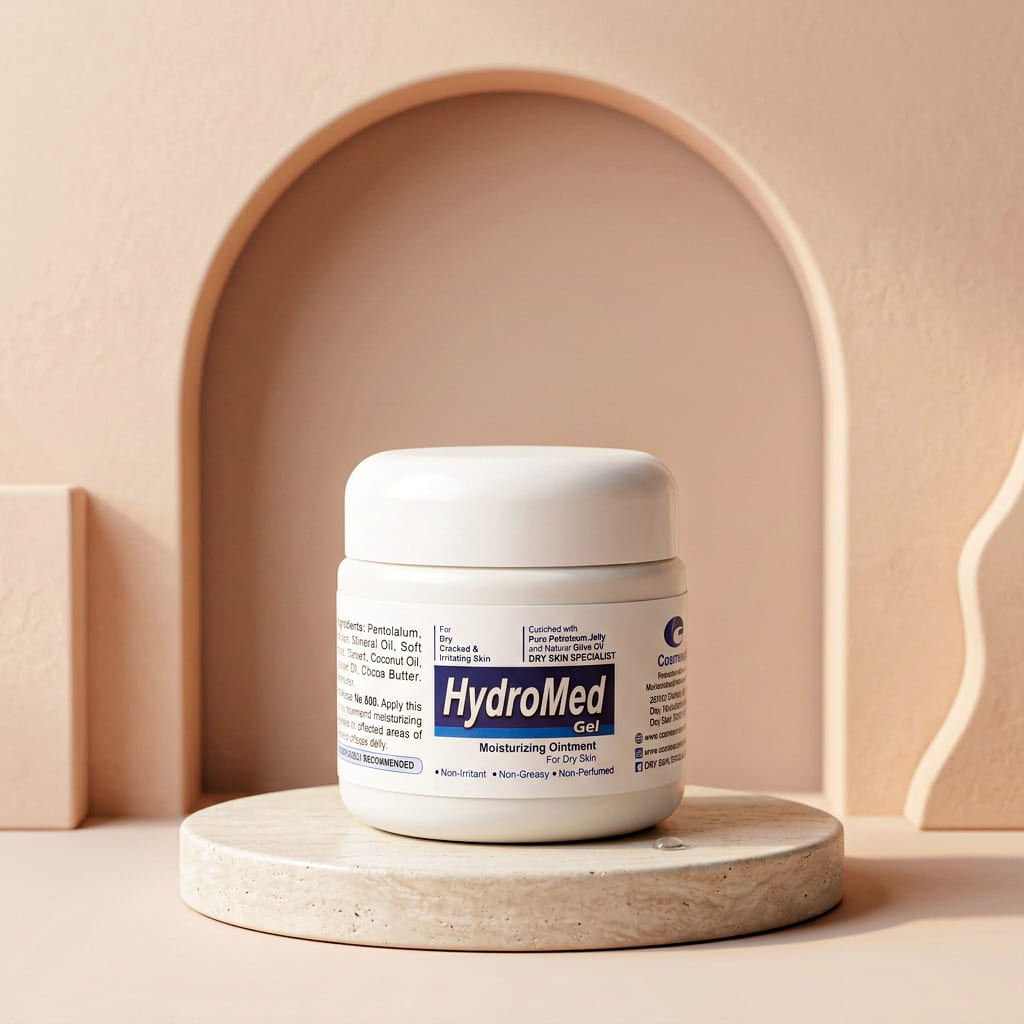
Your own hands get washed and dried many times a day around a baby, and they can feel rough, especially in winter. A rich ointment such as Hydro Med Gel, rubbed into your hands at night, helps them feel soft. Keep it for your own skin unless your paediatrician says otherwise.
If you want to read about grown-up dry skin, see dry skin in winter. That guide is written for adult skin, so check with your paediatrician before using any of its steps on a baby.
Common mistakes to avoid
- Using hot water because the room is cold.
- Using a lot of soap. A little goes a long way.
- Rubbing the baby dry with a rough towel.
- Trying many new products at once.
- Skipping the patch test because the product is sold for babies.
- Leaving damp skin folds without drying them.
- Using adult products on a baby without asking your paediatrician.
Keep it calm and regular
You will learn your baby's skin quickly. You will notice which days it looks soft and which days it looks dry. Keep notes on your phone if that helps, and share them with your paediatrician at the next visit.
You can read more about the products and the baby care range on the baby care page. If you have a question about a product, you can reach the team on the contact page.
In short
A baby's skin is happiest with a short lukewarm bath, a small amount of mild soap, a good rinse and a gentle pat dry. Patch test anything new, change one thing at a time, and ask your paediatrician about rashes, very dry patches or anything that worries you.
Questions
- How often should I bathe my baby?
- Many families bathe once a day in hot weather and less often in cold weather. Keep baths short, use lukewarm water and ask your paediatrician if you are unsure.
- Should I patch test a baby soap?
- Yes. Wash a small area, rinse, pat dry and wait 24 hours before using the product on the whole body. Stop if you see redness or irritation.
- What does the Hydro Med Baby Soap box say about the eyes?
- The box says the soap has a tear-free formula, but it can still hurt the eyes. If it gets into the eyes, rinse thoroughly with plenty of water.
- What should I do if my baby has a rash or very dry patches?
- Ask your paediatrician. Do not try several products one after another, because a doctor can look at the skin and advise you.
More for this concern: Baby Care: products and a simple routine