Dry skin in winter: a simple routine that works
By Team Cosmevo · 9 October 2026 · 6 min read
A good winter routine for dry skin has three steps: wash with a mild cleansing bar in lukewarm water, put on a light moisturiser while your skin is still a little damp, and seal very dry spots like heels, elbows and hands with a rich ointment. Do this every day, not only when your skin feels tight. Small habits matter more than a long list of products.
Why skin gets dry in winter
In Lahore and across the north, winter air is dry and cold. Gas heaters, room heaters and hot showers make it worse. Your skin loses water faster, and it can feel tight, rough or look flaky, especially on the hands, shins, elbows and heels.
Hard water can add to the problem. It can leave skin feeling dry after a wash. You cannot always change your water, but you can change how you wash and what you put on afterwards.
Step 1: Wash with a mild cleansing bar
Dry skin needs cleansing, but gentle cleansing. Strong soaps and very hot water take away the natural oils that keep skin soft.
- Use lukewarm water. Hot water feels good on a cold morning, but it leaves skin drier.
- Keep your bath or shower short.
- Wash with a mild bar, rinse well and pat dry with a soft towel. Do not rub.
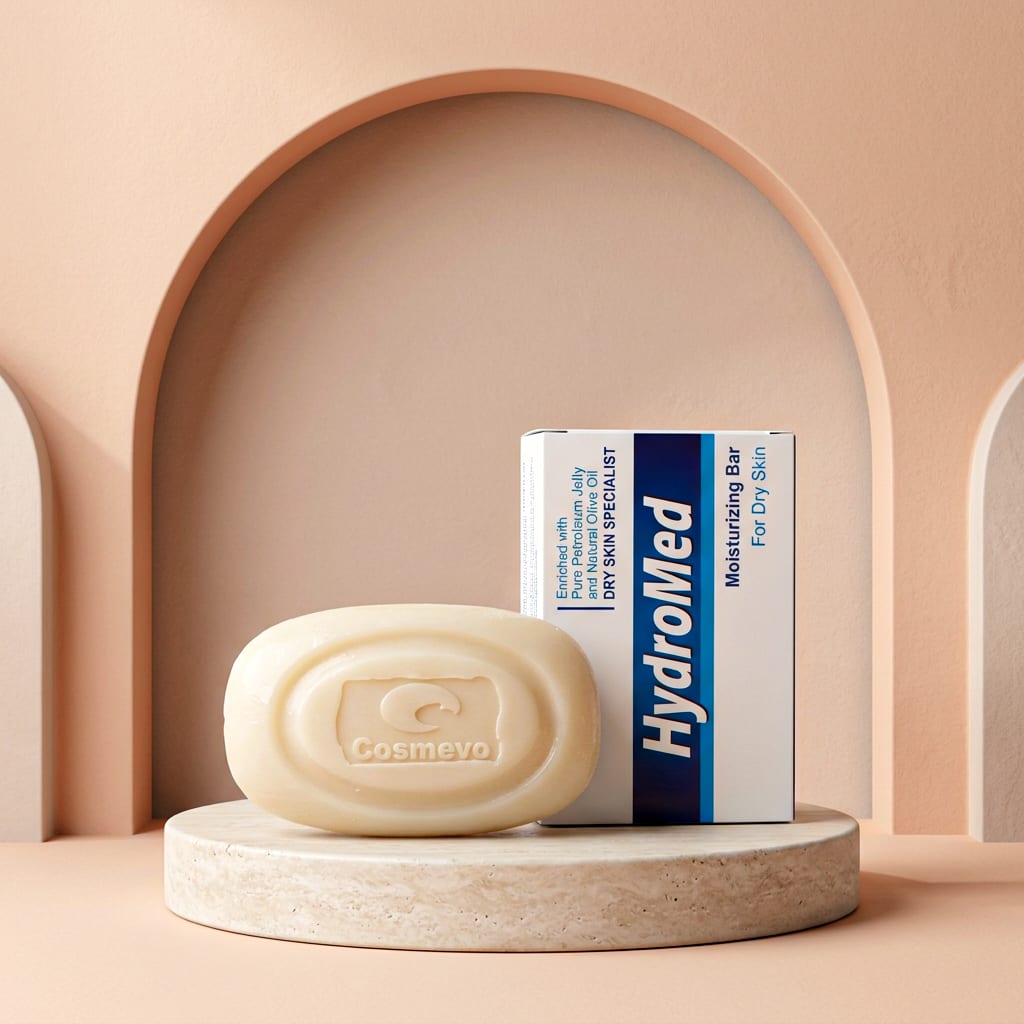
Hydro Med Soap is a moisturising cleansing bar made for dry skin. The box lists pure petroleum jelly, natural olive oil, aloe vera and coconut oil. The box says to massage a rich lather on the skin using lukewarm water, rinse with water and pat dry, and to use it twice a day. You can use it on the face and body.
If your skin feels very tight after washing, cut back to once a day on the days you do not feel dusty or sweaty. If you notice redness or irritation, stop using it and speak to your doctor.
Step 2: Moisturise right after washing
This is the step most people skip, and it is the one that makes the biggest difference. After you pat dry, your skin is slightly damp. That is the right time to apply moisturiser, because it helps hold in the water that is already there.
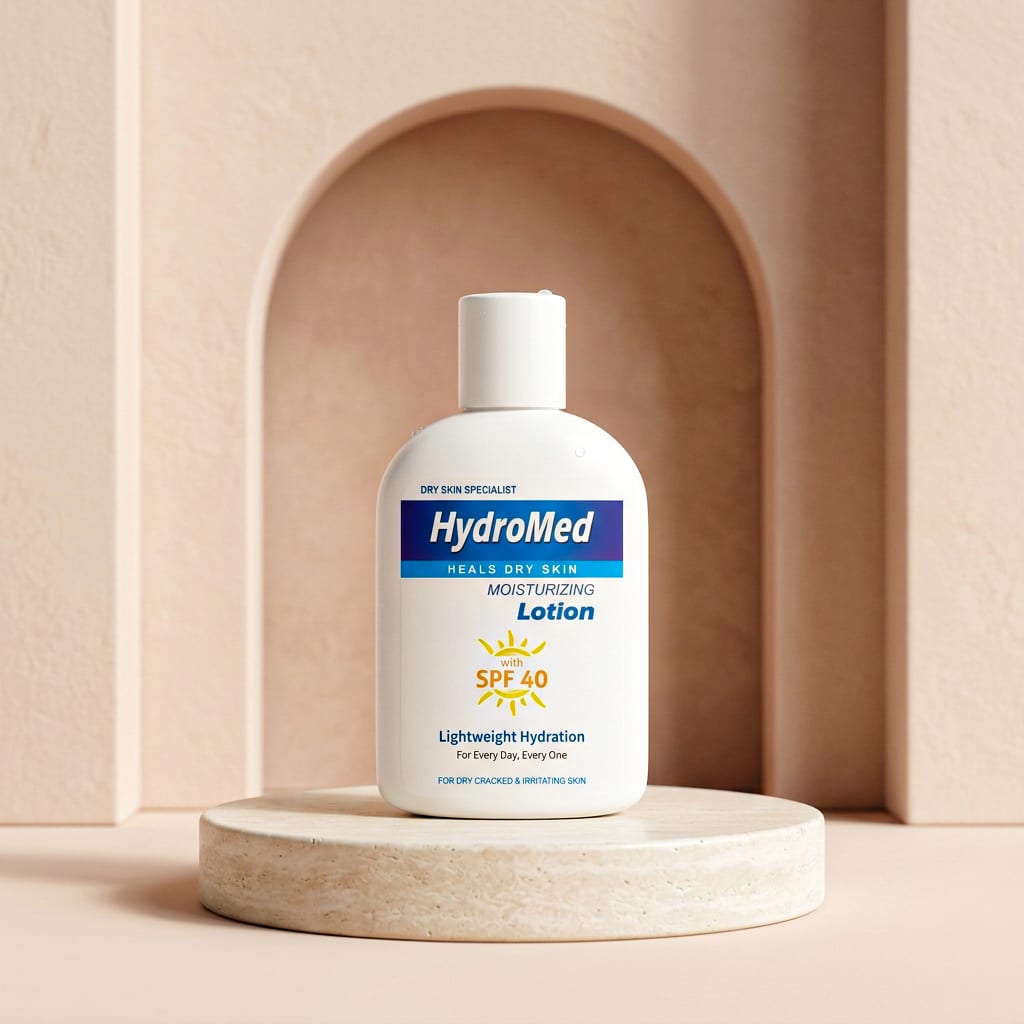
Hydro Med Moisturizing Lotion is a light, oil-free lotion. The box lists niacinamide, vitamin E, shea butter, ceramides and hyaluronic acid. The box says it can be used on the face, neck and hands, 2 or 3 times a day. Hyaluronic acid helps skin hold water, and ceramides are fats that are found naturally in skin.
Apply a small amount, spread it evenly and let it settle for a minute before you dress. Keep a small bottle in your bag, so you can use it on your hands after washing them during the day.
Step 3: Seal very dry spots with an ointment
Some areas need more than a lotion. Heels, elbows, knees and the backs of the hands lose moisture quickly in winter. A rich ointment forms a thin layer on the skin that helps hold in moisture.
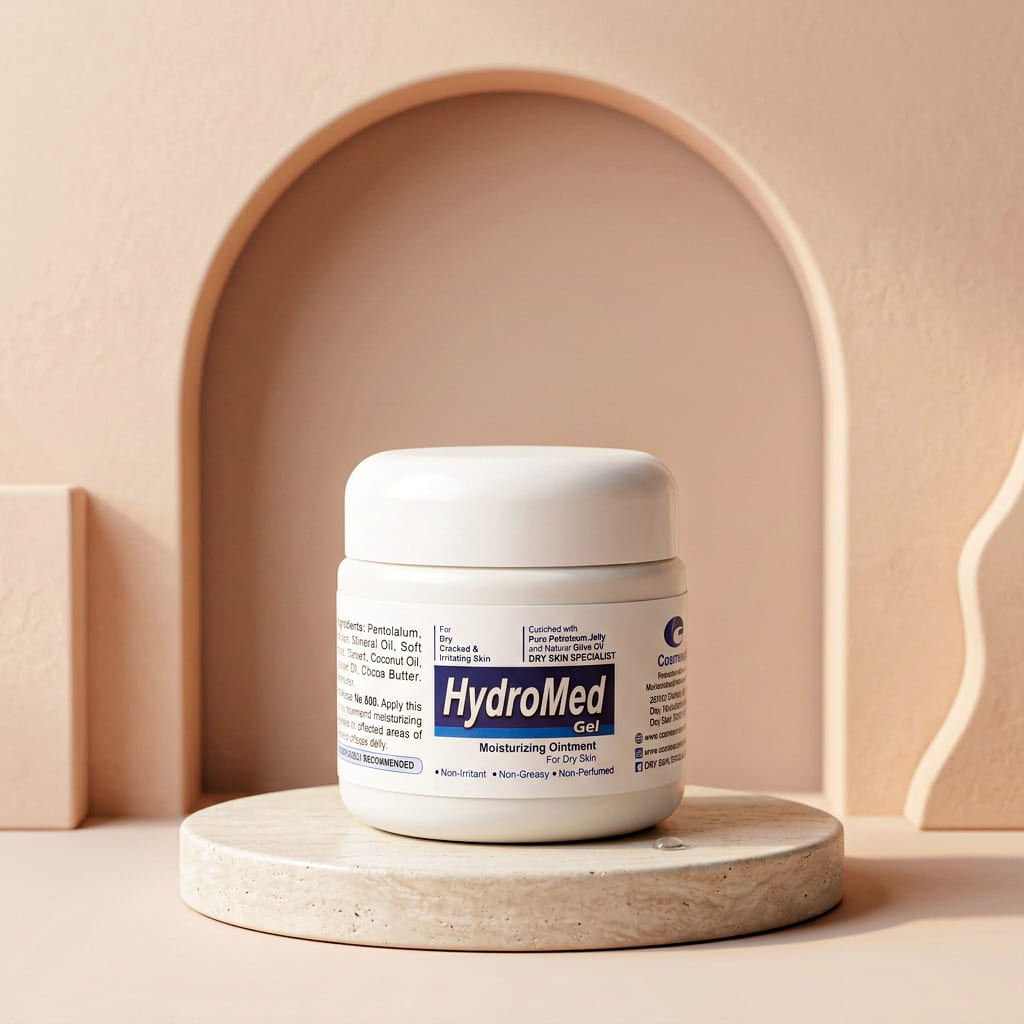
Hydro Med Gel is a moisturising ointment. The box lists petroleum jelly, beeswax, mineral oil, soft paraffin, olive oil, coconut oil, almond oil, cocoa butter and aloe vera oil. The box says to apply a thin film 2 to 3 times a day. Use only a thin layer, because a little goes a long way.
Petroleum jelly is the main ingredient in this kind of ointment. It does not sink into the skin. It sits on top and helps skin keep its own moisture. This is why it works well on small, very dry areas, and why it works well on skin that has just been washed and patted dry.
Do not use the ointment on your eyes. The box says to avoid contact with the eyes and to flush with water if it gets in.
A simple morning and night plan
Morning
- Wash your face and hands with lukewarm water and a mild bar.
- Pat dry, leaving the skin slightly damp.
- Apply the lotion to your face, neck and hands.
During the day
- After washing your hands, pat them dry and apply a little lotion.
- Keep a small amount of ointment for cracked-feeling heels and elbows.
Night
- Wash with lukewarm water and pat dry.
- Apply the lotion again.
- Add a thin layer of ointment to your heels, elbows and the backs of your hands.
- Wear cotton socks over your feet if you like. They keep the ointment on your feet and off the sheets.
Small habits that help
- Drink water through the day, even when it is cold and you do not feel thirsty.
- Keep a bowl of water near a heater if the room feels very dry. It is a simple way to add a little moisture to the air.
- Wear cotton next to the skin. Rough wool can make dry skin feel itchy, so keep a cotton layer under your sweater.
- Wash dishes and clothes with gloves if your hands get very dry.
- Avoid scrubbing hard. Scrubs and rough cloths can leave dry skin feeling sore.
- Sit a little away from the heater, because direct heat dries the skin further.
Patch test first
Before you use a new product on a large area, do a small patch test. Apply a little to the inside of your forearm and wait 24 hours. If the skin stays calm, go ahead. If you see redness, itching or irritation, stop using it. People with very sensitive skin should be careful, and the Hydro Med Soap box says it is not for hyper-sensitive skin.
When to see a doctor
Dry skin that is mild is common in winter. But please see a doctor if your skin is cracked and painful, red, weeping, very itchy, or if it does not improve after a few weeks of steady care. These need to be looked at by a professional, and a moisturiser is not the answer.
More help on dry skin
You can see all the products for this concern on the dry skin page. If you have a baby at home, read caring for a baby's delicate skin before using any adult product on them. If you are not sure what to choose, message the team through the contact page.
In short
For winter dry skin, wash gently in lukewarm water, moisturise while your skin is still damp, and seal the driest spots with a thin layer of ointment. Keep the routine simple, repeat it daily, and see a doctor if your skin is painful or does not improve.
Questions
- When should I moisturise in winter?
- Right after washing, while your skin is still slightly damp. This helps hold in the water that is already on your skin.
- Should I use hot water in winter?
- Lukewarm water is kinder to dry skin. Hot water feels good in the cold but leaves skin feeling drier.
- Can I use the ointment on my face?
- The Hydro Med Gel box says to apply a thin film to the body and to avoid the eyes. For the face, the lotion box says it can be used on the face, neck and hands.
- When should I see a doctor about dry skin?
- See a doctor if your skin is cracked, painful, red, very itchy or does not improve after a few weeks of steady care.
More for this concern: Dry Skin: products and a simple routine